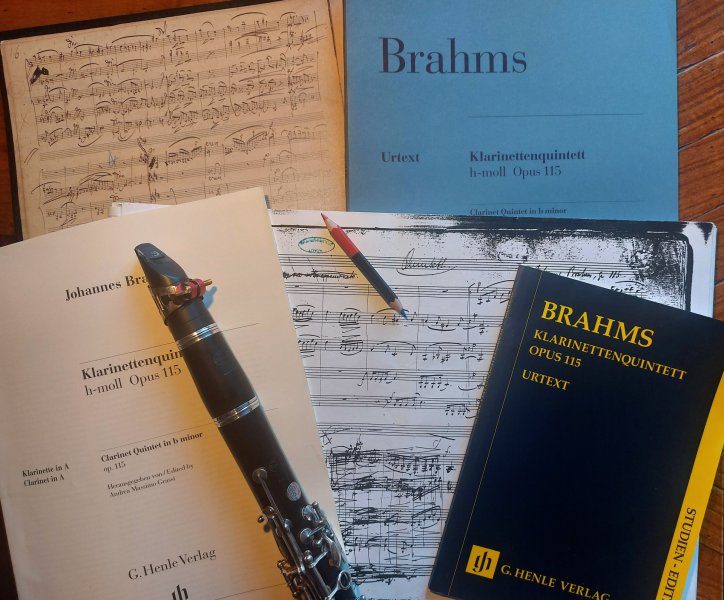
Johannes Brahms, Klarinettenquintett op. 115
Urtext, edited by Andrea Massimo Grassi
G. Henle Verlag, Munich, 2000

Clarinettist, scholar of the musical text, teacher at the Accademia Teatro alla Scala.
Photo: Silvia RasuloPhoto: Marilena Carrozza
Concerts, lecture-recitals, masterclasses and lessons.
Roma, Accademia Nazionale di Danza, Dottorato in Discipline performative (XL ciclo)
Danzare su Bach, Schubert e Brahms: come la musica può ispirare una coreografia
Lecture-recital
Gallarate (VA), Conservatorio ‘Puccini’
Come la conoscenza dei manoscritti può indirizzare l’interpretazione musicale
Seminar and chamber music workshop
Novara, Conservatorio ‘Cantelli’, Festival di Musica da camera
Come la conoscenza dei manoscritti può indirizzare l’interpretazione musicale
Seminar and masterclass
Brescia, Conservatorio ‘Marenzio’, Dottorato in Discipline performative (XL ciclo)
Come la conoscenza dei manoscritti può indirizzare l’interpretazione musicale
Lecture-recital
Messina, Conservatorio ‘A. Corelli’
Laboratorio di interpretazione musicale sulla musica da camera di Mozart, Beethoven, Schubert, Schumann e Brahms
Seminars and masterclasses
Cetraro (CS), 2° Campus Internazionale sulla Pratica e Ricerca Artistica Musicale
Come la conoscenza degli autografi può indirizzare l’interpretazione musicale: il caso delle Sonate op. 120 di Brahms
Lecture-recital
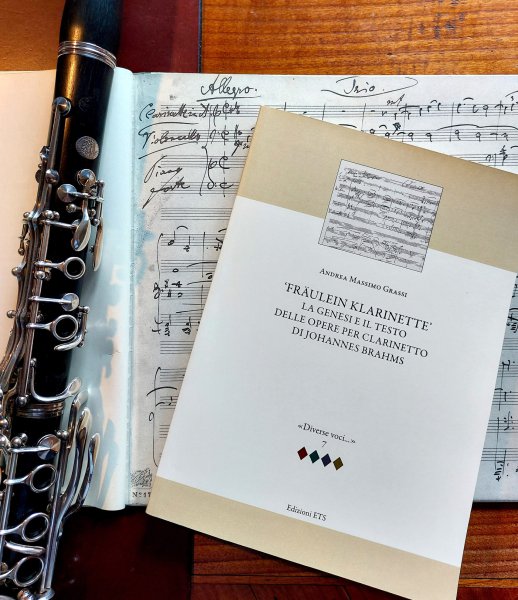
Ten years on the sources of Brahms’s clarinet works, in an edition and a book.
Urtext, edited by Andrea Massimo Grassi
G. Henle Verlag, Munich, 2000
La genesi e il testo delle opere per clarinetto di Johannes Brahms (The genesis and text of Johannes Brahms’s clarinet works)
Edizioni ETS, Pisa, 2006
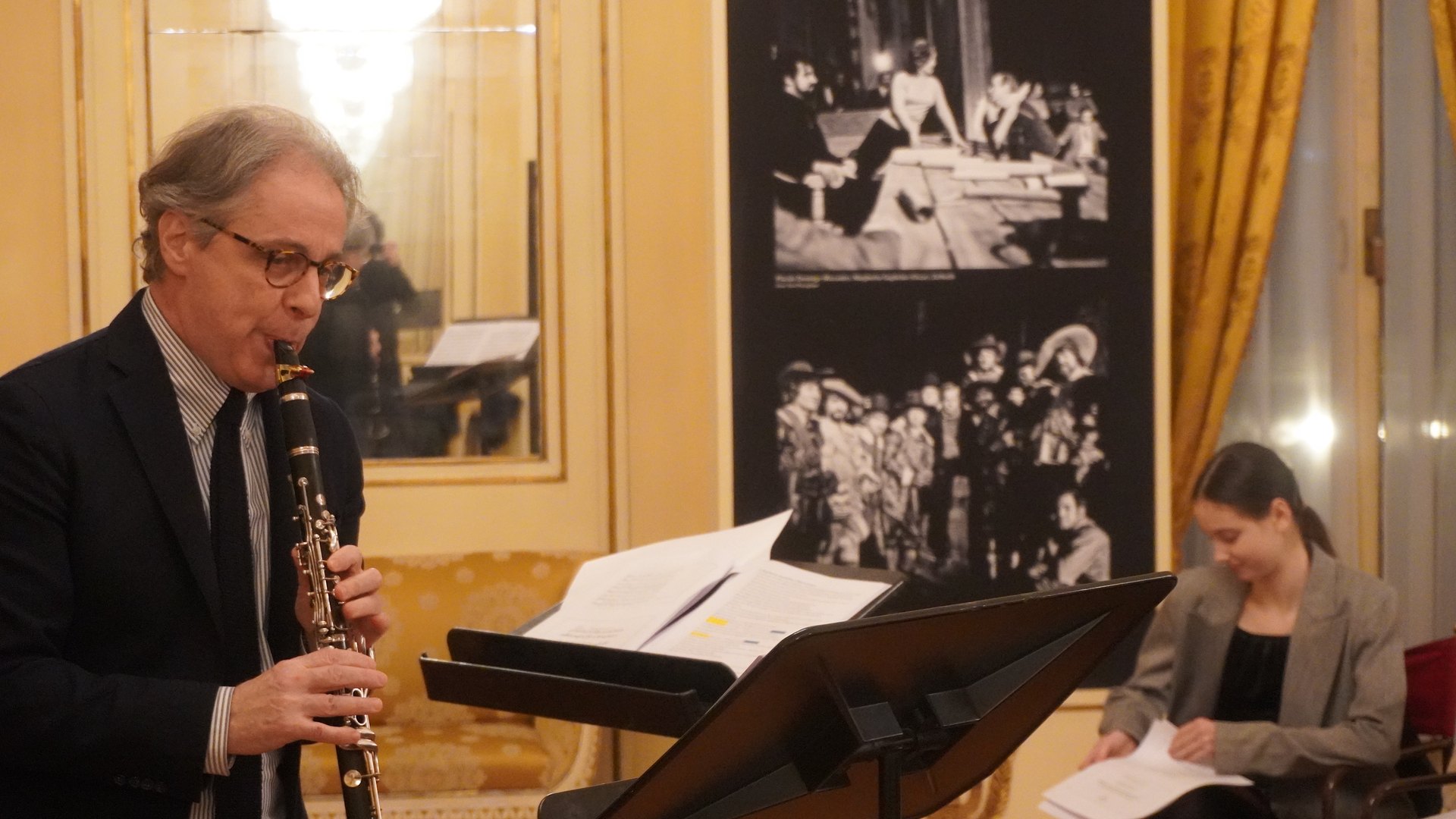
The video is on YouTube: to watch it here, please allow third-party content.
J. Brahms, Clarinet Quintet op. 115 — I. Allegro (excerpt)
Andrea Massimo Grassi, clarinet; Ulrike-Anima Mathé, Kjell Arne Jörgensen, violins; Karin Wolf, viola; Michael Flaksman, cello
Live recording
Image: Teatro alla Scala, 2023. Photo: Andrea Cipolla
«Il clarinettista, in abito di scena, si lascia risucchiare dal suono del suo strumento, lo segue con tutto il corpo, con grande concentrazione emotiva. Il candore con cui ammette di amare il Trio op. 114 è tutto sul suo viso … al cospetto della musica che risuona nitida e perfetta, tutto si ridimensiona e si relativizza»
Avvenire, 3 March 1993
Two stories written by Andrea Massimo Grassi, and the photographs that go with them. They are not about music, yet they always end up there: at sixteen, on a glacier, his fear was that he would never play again; later, as a cavalry officer, he spent his first pay on records.
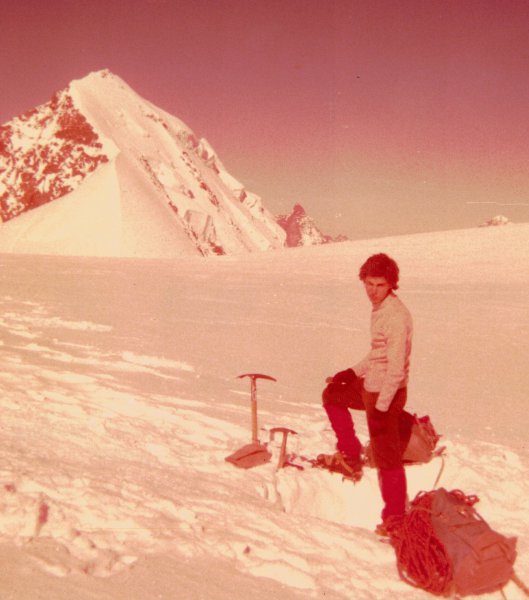
Mountains
September 1977. Aged sixteen, with his cousin Stefano, a forced bivouac above 4,000 metres on the Lys glacier, in the Monte Rosa massif, with no tent and no sleeping bag. The longest night, the starriest sky, and the fear of losing his hands.
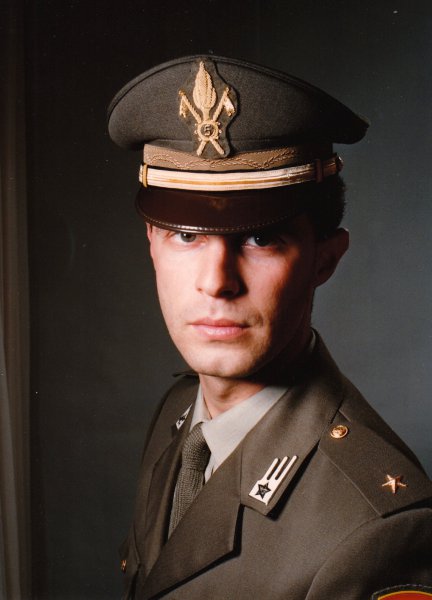
Roots
1988–89. Military service as a cavalry second lieutenant with the Lancieri di Novara in Codroipo, his father’s sabre under his arm. A year told with irony, which turns into a journey through the family’s history — his grandfathers in the First World War, his father an Alpine artillery officer in the Second — and ends with a motto for life.
For concerts, lecture-recitals, masterclasses, publishing projects and press enquiries.
This website uses technical cookies and, with your consent, third-party content such as YouTube videos. Cookie Policy